Five Things to Check Before Buying Your First Automatic Watch
Billy Park
·
Buying a first mechanical watch often begins with brand names. You search familiar makers, compare popular models within your budget, and try to decide which watch carries the most prestige. Yet long-term satisfaction usually depends on more practical questions.
Is it comfortable? Does the movement suit your routine? Can it be serviced where you live? What will it cost beyond the purchase price? Can you trust both the watch and the seller?
A mechanical watch stores energy in a wound mainspring rather than a battery. Its intricate, deliberately old-fashioned operation is part of the appeal — but it also asks more from its owner than a typical quartz watch.
This is not a list of brands you are supposed to buy. It is a practical framework for narrowing your shortlist to a watch that genuinely fits your life.
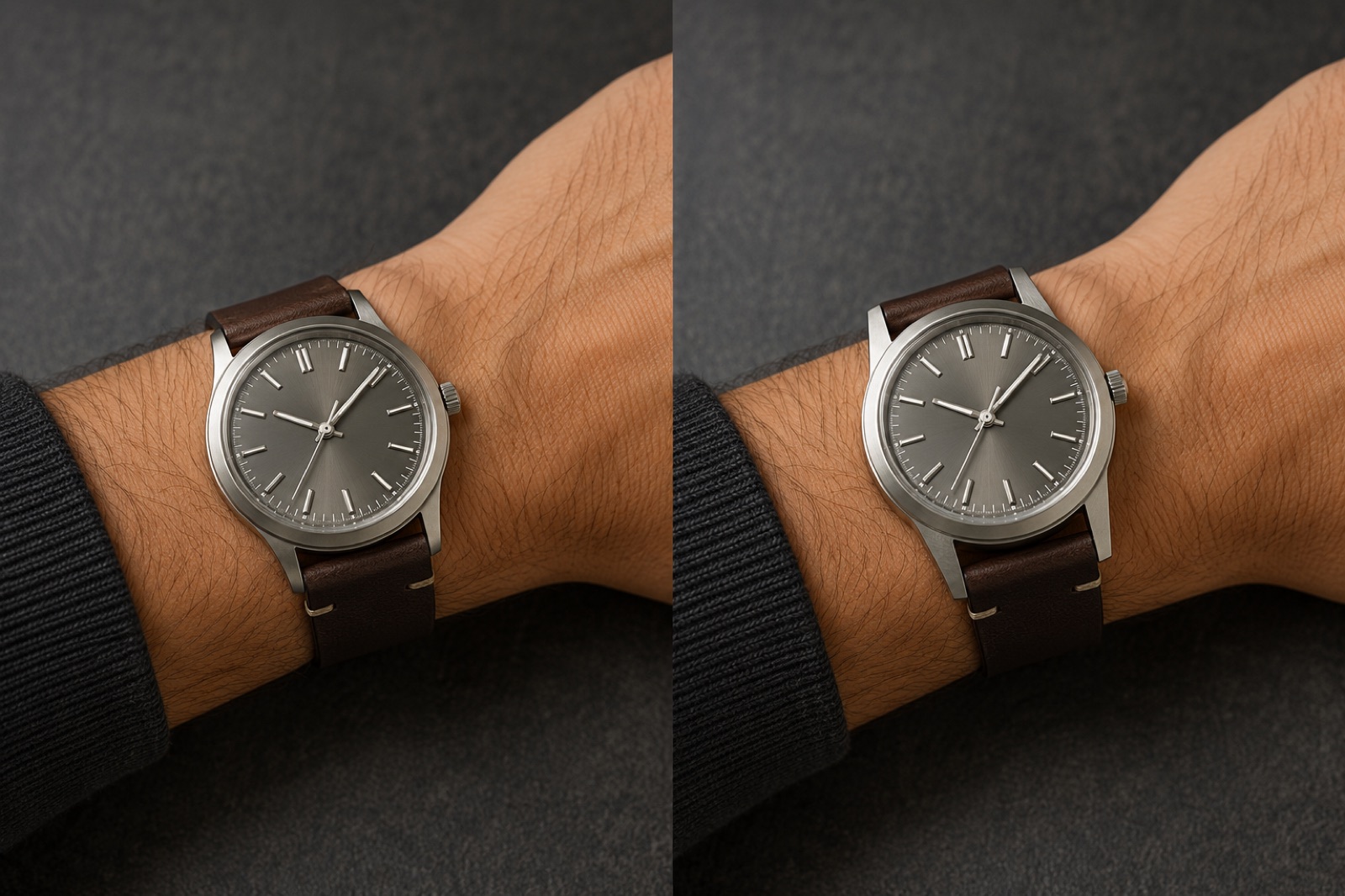
Two watches with the same stated diameter can wear very differently because of:
Lug-to-lug length
Case thickness
Dial opening and bezel width
Crown size
Weight and center of gravity
The point where the strap or bracelet turns downward
A broad dial with a thin bezel often looks larger than its measurements suggest. A dive watch with a thick bezel may look more compact, even at the same diameter.
The Ten-Minute Try-On Test
Adjust the strap or bracelet close to your actual wearing size.
View the watch in a full-length mirror; a close wrist photo can exaggerate its size.
Walk for several minutes and see whether the watch rotates.
Bend your wrist and check whether the crown presses into your hand.
Sit at a keyboard and notice whether the clasp strikes the desk.
Step away from showroom lighting and inspect the dial in ordinary light.
Red flag: “It is uncomfortable now, but I will probably get used to it.” Small annoyances at the boutique often become reasons to leave the watch at home.
2. Make Sure the Movement Fits Your Routine
Mechanical watches are broadly divided into hand-wound and automatic movements. A hand-wound watch requires periodic winding through the crown. An automatic watch uses wrist movement to wind the mainspring, but it will still stop after its power reserve is exhausted.
Before focusing on decoration or movement prestige, ask four practical questions.
Is the power reserve suitable?
If you want to remove the watch on Friday and find it running on Monday, a longer power reserve is helpful. If you wear one watch every day, it may matter much less. If you rotate several watches, easy setting may be more useful than a very long reserve.
Ask to set the time and date yourself. Some date mechanisms should not be quick-set during certain hours. GMT, annual-calendar, moon-phase, and chronograph functions can add enjoyment, but they can also add complexity and service cost.
Does magnetism matter in your routine?
Laptop magnets, tablet covers, speakers, and bag clasps are common. A magnetized mechanical watch may suddenly run much faster than normal. If you work around electronics, compare the antimagnetic specifications of your finalists.
3. Buy a Service Path Along With the Watch
A mechanical watch will eventually need attention. Gaskets may require inspection, accuracy may need regulation, and worn components may need replacement. A good first watch is one you can maintain where you live.
Before buying, confirm:
Whether the brand has authorized service in your country
Whether an independent watchmaker can service the movement
Whether the warranty is international or seller-only
Whether gray-market imports can receive paid factory service
The approximate cost and turnaround time of routine service
Whether discontinued or proprietary parts remain available
Red flag: The seller claims that a mechanical watch will never require service or cannot explain where the model can be repaired.
4. Calculate the Total Cost of Ownership
The purchase price is only the beginning.
Total ownership cost = purchase price + tax and shipping + sizing or straps + insurance + expected service costs − future resale proceeds
Future resale value is uncertain, so treat it conservatively. Also consider selling fees, shipping, inspection costs, and the time required to find a buyer.
Leather straps are consumable. Missing bracelet links can be expensive to replace. Integrated straps may limit aftermarket choices. Complicated or ultra-thin movements can require more specialized service than a simple three-hand movement.
Resale strength is not the same as quality. A beautifully made watch can depreciate, while a scarce popular model may trade at a premium for reasons unrelated to technical merit.
A useful test is simple: Would you still want the watch if its resale value fell another 30 percent? If the answer is yes, your decision is probably based on ownership rather than speculation.
5. Verify the Seller and the Watch’s History
For a used or online purchase, the seller matters as much as the watch. Counterfeit parts, undisclosed replacement components, excessive polishing, and hidden water or impact damage can be difficult to identify from a few photographs.
Request or confirm:
High-resolution photographs taken by the seller
A timestamped photograph when buying remotely
The exact reference and how the serial number is handled
Warranty-card details and service receipts
Replaced parts and polishing history
Whether the dial, hands, bezel, crown, and bracelet are original to the watch
Return period, return conditions, and shipping responsibility
The seller’s process for checking loss or theft records
Boxes and papers can support provenance and resale confidence, but they do not prove authenticity by themselves. The watch, documents, and seller’s explanation must agree.
For an expensive purchase, agree on independent inspection and return conditions before payment. Prefer a protected payment method or escrow when appropriate.
Red flag: The seller avoids reasonable questions, creates artificial urgency, or pressures you to pay before you have had time to inspect the watch.
The 60-Second Final Checklist
Is it comfortable after at least ten minutes?
Did I check lug-to-lug length and thickness, not only diameter?
Is the dial legible in ordinary light?
Does the power reserve and setting process fit my routine?
Do I understand the manufacturer’s accuracy tolerance?
Can the watch be serviced where I live?
Do I understand the warranty and exclusions?
Is the total ownership cost within budget?
Have I verified the seller, history, and return terms?
Would I still want it if its market value fell?
Final Thoughts
Your first mechanical watch does not need to be perfect. It will teach you whether you prefer smaller cases, whether you use a date display, how sensitive you are to accuracy, and whether leather or a bracelet works better in daily life.
The goal is not to discover the one correct watch for the rest of your life. It is to develop a reliable way to choose watches for yourself.
Prioritize fit over specifications, routine over movement prestige, serviceability over discounts, total cost over the price tag, and seller credibility alongside the watch itself. A watch that passes those five tests has a strong chance of becoming a satisfying first mechanical watch — regardless of the name on the dial.
Adapted from an original guide first published in Korean on Kairon Watch.
[…] buying a watch, most people focus first on the brand, design, and movement. Yet the component that most directly affects daily comfort is the one touching your wrist: the […]
[…] Automatic movements contain many interacting mechanical parts and lubricants. Over time they may require cleaning, lubrication, adjustment, gasket replacement, and worn-part replacement. Service cost varies greatly with the movement and brand. […]
To provide the best experiences, we use technologies like cookies to store and/or access device information. Consenting to these technologies will allow us to process data such as browsing behavior or unique IDs on this site. Not consenting or withdrawing consent, may adversely affect certain features and functions.
Functional
Always active
The technical storage or access is strictly necessary for the legitimate purpose of enabling the use of a specific service explicitly requested by the subscriber or user, or for the sole purpose of carrying out the transmission of a communication over an electronic communications network.
Preferences
The technical storage or access is necessary for the legitimate purpose of storing preferences that are not requested by the subscriber or user.
Statistics
The technical storage or access that is used exclusively for statistical purposes.The technical storage or access that is used exclusively for anonymous statistical purposes. Without a subpoena, voluntary compliance on the part of your Internet Service Provider, or additional records from a third party, information stored or retrieved for this purpose alone cannot usually be used to identify you.
Marketing
The technical storage or access is required to create user profiles to send advertising, or to track the user on a website or across several websites for similar marketing purposes.



Leave a Reply