This is general fitness guidance, not medical advice. If you have an existing condition, an injury, or you have not exercised regularly in some time, talk to a doctor before starting a new program.
“Should I do yoga, Pilates, or hit the gym?” is one of the most common questions in fitness — and the honest answer is that there’s no universal winner. Each one is genuinely excellent at what it does, and the right choice depends less on which is “best” and more on which one fits your goals, your body, your personality, and your life right now.
Here’s how to think through the decision, what each option is actually good for, and a simple routine to try for each.

It Depends on Five Things
1. The Goals You’re Setting
Building visible strength and muscle points toward the gym. Improving flexibility, balance, and stress levels points toward yoga. Wanting core strength, better posture, and low-impact toning points toward Pilates. Be honest about what you actually want — not what sounds most impressive.
2. Your Body’s Current Readiness
If you’re recovering from injury, deconditioned, or new to exercise entirely, yoga and Pilates are gentler starting points that build a base without heavy joint loading. If you’re already reasonably fit and want to push strength and intensity, the gym has more room to progressively overload.
3. Your Style and Personal Preferences
Some people love the meditative, introspective feel of yoga. Some love the precise, controlled movements of Pilates. Some love the energy and measurable progress of lifting in a gym. None of these is more “legitimate” than the others — the one you enjoy is the one you’ll actually keep doing.
4. What’s Readily Available Around You
A nearby gym with good equipment, a Pilates studio within a reasonable commute, or a yoga class at a time that fits your schedule — access changes the calculus considerably. The “best” workout that you skip because it’s inconvenient loses to a “good enough” workout you actually show up for.
5. Your Budget
Yoga can be done for free with online videos and a mat. Gym memberships range from very affordable to expensive depending on the facility. Pilates, especially reformer-based studio classes, tends to be the most expensive of the three. Your budget is a legitimate, practical filter — not a compromise.
Yoga: Pros, Cons, and a Simple Routine

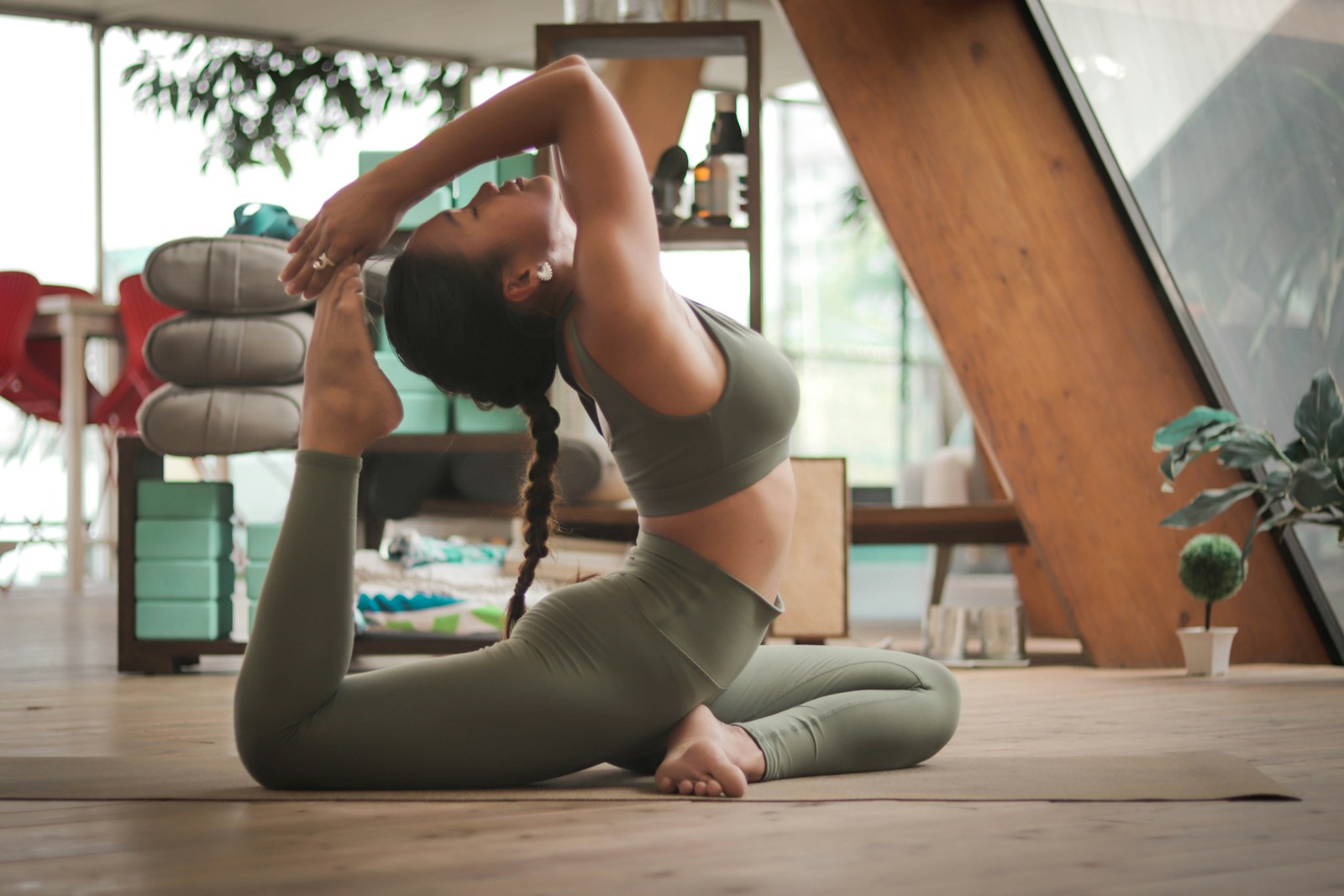
Pros: Excellent for flexibility, balance, and stress reduction. Very low cost to start. Low impact on joints. Scales from complete beginner to advanced practitioner. Doubles as a mental-health practice through breathing and mindfulness.
Cons: Builds strength more slowly than the gym. Progress can be harder to measure objectively. Some styles (power yoga, hot yoga) are more physically demanding than people expect going in.
Simple starter routine (15–20 minutes, most days):
- 5 rounds of Sun Salutations (Surya Namaskar) for a full-body warm-up
- Downward Dog → Warrior I → Warrior II on each side, held for 5 breaths each
- Seated forward fold, held for 1 minute
- 5 minutes of seated breathing or a short guided meditation to close
Pilates: Pros, Cons, and a Simple Routine

Pros: Outstanding for core strength, posture, and controlled, injury-conscious movement. Great bridge between rehab and general fitness. Works well for people who want strength training without heavy joint impact.
Cons: The most expensive option, especially with a reformer machine and instructor-led sessions. Builds cardiovascular fitness and raw strength more slowly than the gym. Requires some access to equipment or a studio for the full experience.
Simple starter routine (mat-based, no equipment, 15 minutes):
- The Hundred — 10 sets of 10 pulses, breathing in a 5-count rhythm
- Single-leg stretch — 10 reps per side
- Roll-up — 8 slow, controlled reps
- Plank hold — 3 rounds of 30 seconds
- Swan (gentle back extension) — 8 reps
The Gym: Pros, Cons, and a Simple Routine

Pros: Fastest, most direct path to building strength and muscle. Highly measurable progress — you can track weights, reps, and numbers going up. Widest range of equipment for targeting specific goals, from fat loss to serious strength training.
Cons: Higher injury risk without proper form, especially early on. Can feel intimidating or crowded for beginners. Often requires a membership cost, and progress requires more structured programming to avoid plateaus.
Simple starter routine (full-body, 3x per week):
- Squats — 3 sets of 10
- Push-ups (or bench press) — 3 sets of 8–10
- Seated row or lat pulldown — 3 sets of 10
- Plank — 3 rounds of 30–45 seconds
- 10 minutes of light cardio to finish (treadmill, bike, or rower)
What Should You Actually Consider When Choosing?
One useful tie-breaker: whichever you pick, the target is the same. The NHS recommends adults do at least 150 minutes of moderate-intensity activity a week, or 75 minutes of vigorous, plus strengthening activities that work all the major muscle groups on at least two days a week.
Yoga, Pilates and the gym can all contribute to that — the gym most directly to the strengthening half, yoga and Pilates to strength and flexibility. So the better question is not which is objectively best, but which one you will do often enough to actually reach those numbers.
Run through these questions honestly:
- What do I actually want to change — strength, flexibility, stress, posture, or overall fitness?
- Do I have any injuries or physical limitations I need to work around right now?
- What’s realistically available near me, and at what cost?
- Which of these have I enjoyed before, or genuinely look forward to trying?
- How much time can I consistently commit each week — not in an ideal world, but in my actual schedule?
A Few More Tips
- You don’t have to pick just one. Many people mix two or three — yoga for recovery days, the gym for strength, Pilates for core work. There’s no rule against combining them.
- Try before you commit. Most studios and gyms offer trial classes or day passes. Use them before buying a package or membership.
- Consistency beats the “perfect” choice. A decent routine you do three times a week will always outperform a perfect routine you do once a month.
- Let your goals evolve. The right choice today doesn’t have to be the right choice forever — it’s completely normal to switch or blend as your body and goals change.
The Bottom Line
Yoga, Pilates, and the gym are not competing against each other — they’re different tools for different goals. Yoga builds flexibility and calm. Pilates builds core strength and control. The gym builds raw strength and measurable power. Match the tool to your goals, your body, your budget, and what’s actually available to you, and you’ll land on the right one — or the right combination.
Related: once you have picked a discipline, our sustainable fitness plan for adults over 40 covers how to structure the week around it.


Leave a Reply