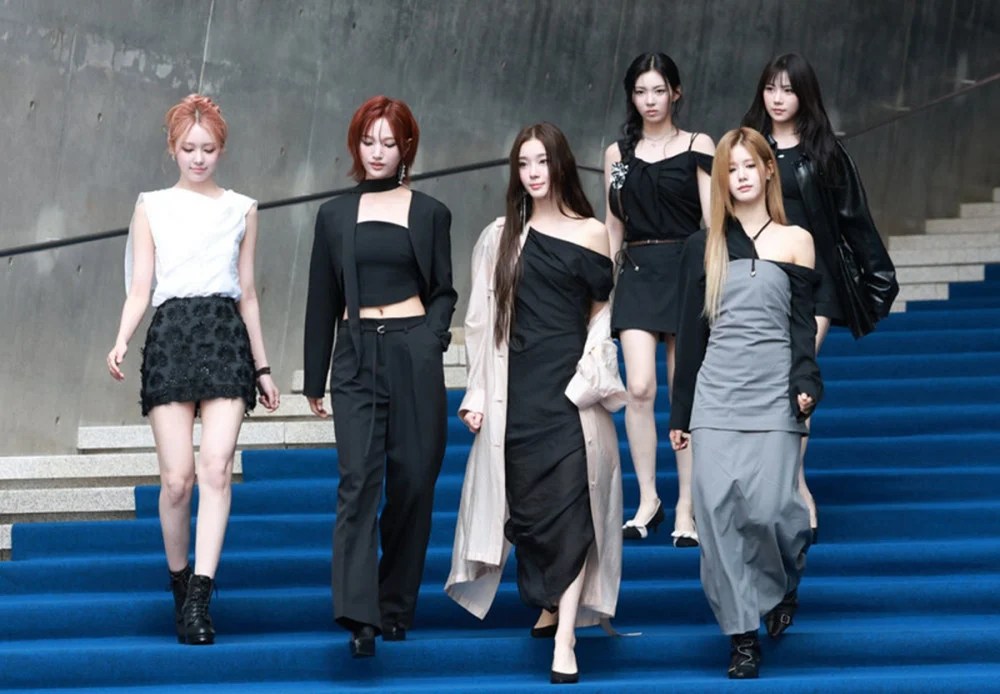
Let’s settle something right now. For decades, the global fashion conversation had four capitals: New York, London, Milan, Paris. Everything else was regional, derivative, orbiting. Seoul watched from the outside, absorbed the signals, and adapted them with impressive speed. That era is over. Seoul Fashion Week 2026 didn’t just confirm that Korea has arrived on the world stage — it made the case that the world stage has quietly relocated to Dongdaemun.

🏙️ What Happened at SFW FW26 — The Show Itself
Seoul Fashion Week 2026 opened on February 3 at Dongdaemun Design Plaza, with 15 fashion shows and 9 presentations from 24 brands packed into six electric days. DDP served as the central hub — a single, unified district of runway shows, trade floors, and fashion forums, streamlining the week into something that felt less like a regional showcase and more like a genuine world event. The Motley Fool
The defining thread of the entire season was reinterpretation. Designers embraced experimental Korean fashion while ensuring silhouettes remained commercially viable — the tension between oversized tailoring and fluid layering reflected an industry that understands both avant-garde ambition and consumer reality. That balance — conceptual but wearable, daring but sellable — is Seoul’s signature move, and nobody does it better. TECHi
Military garments were deconstructed and reassembled into sculpted bodysuits and softened outerwear. Structured field jackets became fluid silhouettes. The opening show by MUNN set the tone immediately: structure dismantled, then rebuilt as something softer, stranger, and more alive than what it started as. TECHi
MMAM, designed by Park Hyun, went inward. Titled “Emerging Layers,” the collection examined the fleeting afterimages of the unconscious — emotions and memories that surface unexpectedly through movement. Linings and inner fabrics slipped through cutouts and openings as models walked, quietly revealing what lay beneath. Pajama-like materials were styled with tailored coats, creating looks that could transition effortlessly from home to street. Decrypt
This is what Seoul does better than anywhere else: it makes the psychological visible through fabric. Clothes as feelings. Clothes as memory. Clothes as architecture for the inner life.

👟 The Street: Where the Real Show Happens
If the runway is the argument, the street outside DDP is the proof. And in 2026, the proof was overwhelming.
Seoul once again confirmed its place among the fashion capitals — stated not only by the shows themselves, but above all by its street style. It is in the Korean capital that newly debuted collections truly come to life through bold styling and a remarkable ability to anticipate trends that will influence looks throughout the fashion month and even the algorithms of the fashion industry. Watcher Guru
From bold silhouettes to tonal looks, the street style outside SFW told its own story: a cropped amber jacket catching the light with a glossy finish, its sharp length giving the illusion of longer legs. A deep navy overcoat with clean decisive lines, accessorized with nothing but black sunglasses and shell earrings — quiet confidence, nothing forced. A leather blazer with side lacing and metallic fastenings carrying weight entirely on its own. Bitget
Nobody in Seoul overdresses. Nobody underdresses. They dress exactly right for a world that is always watching — and increasingly, it is.

🎭 Vintage vs. Avant-Garde: Seoul’s Answer Is Both, and Neither
This is the question everyone wants answered: is Seoul’s fashion soul rooted in nostalgia, or pointed at the future?
The honest answer is that Seoul has decided the question is irrelevant.
Experimental materials that marry vintage aesthetics with futuristic details are gaining traction, alongside an increased focus on techwear elements that enhance performance and style. The boundary-pushing melding of old-meets-new mirrors Korea’s avant-garde spirit, impacting global streetwear movements as designers and wearers seek fresh perspectives. Samsung Global Newsroom
On the vintage side, the movement is real and growing. The Korean fashion landscape in 2026 has pivoted away from rigid minimalism to embrace a bold hybridization of technology, nostalgia, and environmental consciousness. Hand-crocheted textures, references to Korean traditional silhouettes, deconstructed heritage garments — these are not ironic nods to the past. They are sincere excavations of identity, the same impulse that drives the broader Korean cultural renaissance. CNN
On the avant-garde side, POST ARCHIVE FACTION (PAF) is the rising story of 2026: modular, deconstructed silhouettes receiving serious international press attention. Founded by Dongjoon Lim in 2018, PAF operates at the intersection of technical sportswear and avant-garde design, creating garments that look like they were engineered rather than designed. This is fashion as architecture. Fashion as systems design. Fashion for a world where the boundary between clothing and technology is dissolving in real time. Samsung Global Newsroom
Ader Error, meanwhile, remains synonymous with experimental streetwear and conceptual design — transforming everyday items into playful artistic expressions with asymmetrical cuts, oversized silhouettes, and quirky graphics. Its design philosophy focuses on creativity over conformity, making it a favorite among Gen Z and trend-conscious shoppers globally. The Motley Fool
The verdict: Seoul is the only fashion capital in the world that can hold vintage and avant-garde in the same hand without either one feeling like a contradiction. That tension is not a flaw. It is the whole point.

🌍 Seoul on the World Stage: No Longer Emerging
Seoul Fashion Week expanded significantly in international influence throughout the 2020s. Buyers, editors, and influencers increasingly attend to identify emerging luxury streetwear trends before they reach global mainstream markets. Seoul’s fast-moving creative culture allows designers to experiment more freely than traditional luxury capitals. Seoul now shapes fashion conversations rather than simply responding to Western trends. Yahoo Finance
The numbers back the feeling up. Google is investing $100 million in a Korean eyewear brand to co-develop smart glasses. K-fashion has moved well past the hype cycle — these are the Korean brands building actual global empires. Gentle Monster didn’t just become a luxury eyewear brand. It became a luxury art institution with stores that double as immersive theatrical environments, and it did it from Seoul. Samsung
At Paris Fashion Week FW2025-26, Korean designers made a powerful statement. Kimhekim celebrated its 9th anniversary with a collection that seamlessly blended tailoring with Korean sensibilities — draping couture, pearl embellishments, and mesh materials creating elegant flowing silhouettes. De Moo unveiled “From Nothing,” a collection of black and white built around striking contrasts of wool, jacquard, cupra, and metallic fabrics. This movement is not only gaining attention but inspiring global markets to emulate K-style. Samsung
For SFW 2026 S/S, the city went a step further — partnering with Berlin Fashion Week’s official showroom to bring 12 rising Berlin brands to Seoul for the first time, combining sustainability, traditional aesthetics, and material innovation. Seoul isn’t just receiving the world. It is inviting the world in, on its own terms. Yahoo Finance

💥 The K-Trend Effect: How Korea Moves the Needle
Here is the mechanism that no other city has — and it is the secret weapon behind everything:
Idol styling teams now operate as de-facto trend forecasters whose influence reaches retail floors faster than any traditional fashion week pipeline. When Red Velvet’s Seulgi appeared in a grey high-neck fleece paired with plaid pants and chunky boots, the look spread across Korean street style photography and social platforms within days — becoming one of the most replicated looks of 2026 in Seoul. Gotrade
BLACKPINK’s Lisa and aespa’s Giselle wearing Andersson Bell generates measurable traffic to the brand’s webstore, often resulting in sellouts within 24–48 hours. BTS’s J-Hope has become so closely associated with Ader Error that the brand’s experimental aesthetic is frequently described through his airport and off-duty looks. Gotrade
No other city in the world has this. Not Paris, where fashion moves through editors and runway calendars. Not New York, where trends filter through retail cycles. Seoul has a real-time cultural distribution engine — K-pop, K-drama, K-content — that moves fashion at the speed of a social media algorithm. A single airport outfit becomes a trend within 48 hours. A single drama styling choice rewrites what an entire generation wants to wear.
Korean designers have mastered the balance between minimalist luxury and experimental streetwear aesthetics, creating collections that resonate strongly with Gen Z and younger affluent consumers worldwide. Oversized tailoring, technical fabrics, futuristic silhouettes, and utility-inspired layering have become signatures of Korean luxury streetwear, influencing both independent designers and major houses globally. Samsung Global Newsroom

🔮 What Comes Next: The Prediction
Based on everything SFW 2026 told us, here is where Korean fashion is heading for the rest of the year and into 2027:
The vintage-tech hybrid becomes the dominant global aesthetic. Seoul is already living in this future — handcraft details on technical fabrics, heritage silhouettes rebuilt in performance materials, nostalgia encoded into futuristic forms. By late 2026, expect European houses to be borrowing heavily from this grammar without always crediting the source.
PAF and the deconstructivist wave goes fully mainstream. What feels like an insider conversation today — modular garments, engineered silhouettes, clothing as system — will be on the windows of major global retailers within 18 months. PAF is to 2026 what Vetements was to 2015: the signal before the flood.
K-fashion finally gets its own luxury tier. Seoul has had streetwear. It has had premium. What it has not had yet is a homegrown house that sits at the very top of the global luxury pyramid alongside Chanel, Hermès, or Louis Vuitton. That house is being built right now — possibly by someone who showed at DDP this February to a room that didn’t yet fully understand what it was seeing.
Seongsu-dong becomes the world’s most important creative neighborhood. Seongsu-dong has consolidated its position as Seoul’s creative fashion nucleus — and its story is not finished. Think Soho in the 1980s, Shoreditch in the 1990s, Marais in the 2000s. Seongsu-dong in 2026 is where the next decade of global fashion is being invented, one independent label at a time. Samsung Global Newsroom

There is a particular kind of excitement that only comes when you are watching something become itself — when a city, a culture, a creative movement stops performing confidence and starts simply having it. Seoul passed that threshold quietly, somewhere between the pandemic and the present, while the rest of the world was busy looking elsewhere.
The rest of the world is paying attention now.
This post is editorial and intended for fashion enthusiasts and cultural observers. Trend predictions are the author’s own analysis.
Seoul’s style extends well beyond the runway — see The Bag on the Subway: Understanding Korea’s Complicated Love Affair with Luxury and our roundup of Fall/Winter 2026 fashion trends from New York, Milan and Paris.


Leave a Reply