There is a particular kind of resilience that only certain cities possess — the ability to be reshaped by forces larger than themselves and still emerge, unmistakably, as themselves. Hong Kong has this quality in abundance. Nearly three decades after the handover of sovereignty to China in 1997, the city has been pulled, pressed, and transformed in ways that would have been unimaginable to the generation that watched the British flag come down. And yet. Stand on the Tsim Sha Tsui waterfront at night and watch the light show ripple across Victoria Harbour. Walk the narrow streets of Sheung Wan at dusk, where incense from a century-old temple mingles with the smell of single-origin coffee from the café next door. Eat a bowl of wonton noodles at a street-side stall while a Michelin-starred restaurant hums behind the wall at your back.
This is still Hong Kong. Battered, transformed, contested — and electrifyingly, defiantly alive.
🏙️ The City That History Kept Rewriting
To understand Hong Kong today, you have to hold two truths at once: the city has changed significantly since the handover, and the city has remained more distinctively itself than almost anyone predicted.
The 1997 handover to China marked a significant turning point in Hong Kong’s identity. After over 150 years of British colonial rule, Hong Kong was handed back to China under the “One Country, Two Systems” policy — intended to ensure that Hong Kong would retain a high degree of autonomy, including a separate legal system and political institutions. The implementation of this policy has been challenging, and concerns about the erosion of Hong Kong’s autonomy have led to renewed attention to its unique cultural identity. Middle East Council on Global Affairs
Cantonese remains the dominant language in Hong Kong and is seen as a crucial aspect of the city’s unique identity, while English and Mandarin reflect Hong Kong’s global connections and its relationship with mainland China. This three-language life — switching registers between Cantonese, English, and Mandarin depending on who you’re speaking to and what you’re discussing — is not confusion. It is sophistication. It is Hong Kong’s linguistic fingerprint, and it has not been erased. Middle East Council on Global Affairs
What has changed is the texture of daily life in ways both visible and subtle. Mandarin is heard more on the MTR. Mainland Chinese visitors and new residents have reshaped certain neighborhoods. Some familiar faces have left. But what has also happened — and this is the part that gets less attention — is that the pressure of transformation has produced a fierce, energized, almost defiant celebration of Hong Kong’s own culture. Cantonese opera, local film, traditional craft, neighborhood art — all of it has found a new urgency, a new audience, a new pride.
The role of art and culture in Hong Kong has taken on increasing prominence in the city’s search for an identity in the years since China resumed sovereignty. The limitations on certain forms of political expression have led more residents to seek expression or confirmation of their identities through arts and culture. CNBC
The result is a city that feels, paradoxically, more self-aware of its own identity than at any previous point in its history. Hong Kong knows what it is now, in a way it perhaps did not need to know when the answer seemed obvious.
🍽️ The Food: Still the Best Argument for the City’s Existence
This bustling city of eight million residents has one of the highest densities of restaurants in the world, and a culinary scene as varied and vibrant as the incredible flavours on offer. Gastronomes in search of excellence will find it everywhere — from traditional cha chaan tengs, to any one of 63 Michelin-starred eateries. Hong Kong ranks an impressive sixth in the international league table, ahead of larger cities like Shanghai and San Francisco. Congress.gov
Food in Hong Kong is not a pastime. It is the primary language of love, identity, family, and belonging. The importance of good food is even embedded in the language itself — relatives greet each other by asking whether they’ve eaten, rather than asking how they are, and the word dim sum literally means “to touch the heart.” Congress.gov
Dim Sum — The Meal That Defines the City
All roads lead to dim sum. Maxim’s Palace in City Hall — a grand, chandelier-lit venue with floor-to-ceiling views of Victoria Harbour — is one of the last remaining yum cha restaurants that still offers traditional cart service, feeding hundreds of diners at a time from trolleys piled high with bamboo baskets of steaming buns, dumplings, noodles, and spring rolls. Book well in advance. Congress.gov
Maxim’s has also opened a new Mong Kok location that combines the old — hand-pushed dim sum carts — with the new, including a dedicated Dim Sum Academy offering workshops for those who want to master the art of yum cha firsthand. Tim Ho Wan, once the world’s cheapest Michelin-starred restaurant, has opened a polished new flagship that proves you can have both accessibility and excellence. And Sun Hing in Kennedy Town remains the insider choice for early-morning dim sum — they open before dawn and the serious eaters arrive before sunrise. Oxford Economics
The Institutions
Lung King Heen at the Four Seasons was once the world’s first Chinese restaurant to earn three Michelin stars, holding them for over a decade. It now sits at two — still serving next-level seafood, dim sum that ruins you for all others, and legendary pineapple pork buns stuffed with barbecued pork and pine nuts. World Economic Forum
Ho Lee Fook in SoHo is a different experience entirely — moody lighting, 80s Canto-pop blaring, gold mirrored ceiling. Chef ArChan Chan, a Hong Konger who returned to her roots after years working abroad, takes Cantonese classics and gives them a cheeky, modern twist: silky dumplings with unexpected pops of flavour, seafood dishes that demand full attention, slow-cooked Wagyu shoulder. This is what Hong Kong’s food scene does better than anywhere else — it honors the tradition while reinventing it entirely, and somehow both things feel completely authentic. World Economic Forum
For roast meats, Kam’s Roast Goose or Yat Lok are the names every local gives you. For wonton noodles, Mak Man Kee or the legendary Mak’s Noodles. For street food classics, Oi Man Sang. For the best hot pot in the city, Big JJ Seafood Hotpot. AFAR
The Cha Chaan Teng — Hong Kong’s Greatest Cultural Export
No visit is complete without sitting in one of Hong Kong’s iconic cha chaan tengs — the hybrid tea restaurants that exist nowhere else on Earth, born from the collision of British colonial café culture and Cantonese working-class practicality. Milk tea pulled through a cloth strainer. Pineapple buns split and filled with cold butter. Egg tarts still warm from the oven. French toast fried in egg and served with golden syrup. The cha chaan teng is Hong Kong’s culinary autobiography — a story of adaptation, invention, and the peculiar genius that emerges when two cultures collide and neither one fully wins.
🏛️ Hottest Spots: The Essential Hong Kong
Victoria Harbour — The View That Never Gets Old
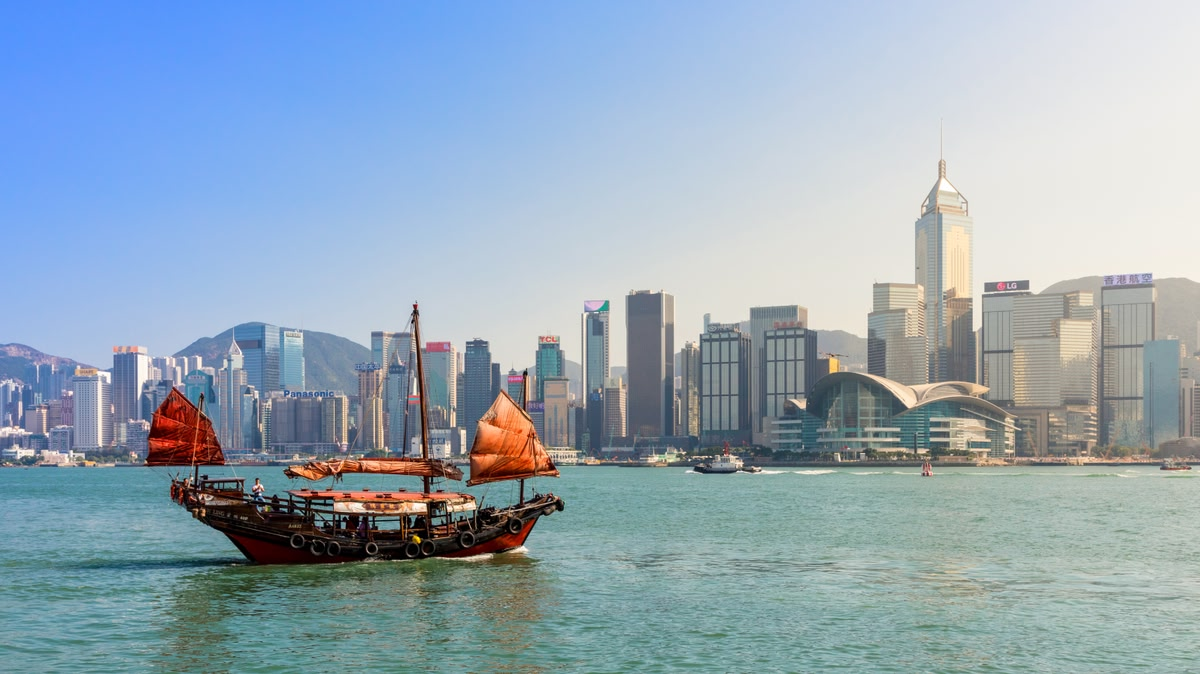
The Symphony of Lights show runs every night at 8pm — 44 buildings across both shores of the harbour choreographed into a display of lights and lasers that is, against all odds, still spectacular after two decades. Watch it from the Tsim Sha Tsui promenade on the Kowloon side, where the view of Hong Kong Island’s skyline is at its most dramatic. This is the image Hong Kong holds of itself, and it earns it entirely.
The Peak — Hong Kong from Above
The Peak Tram, running since 1888, climbs to Victoria Peak at a gradient steep enough to make first-timers grip their seats. The view from the top — on a clear day — is one of the great urban panoramas on Earth: the tightly packed towers of Hong Kong Island dropping sharply to the harbour, Kowloon beyond, the New Territories stretching toward the horizon. Come at dusk. Stay for the moment the city lights itself up.
Tai Kwun and PMQ — Where Heritage Became Hip
Tai Kwun, repurposed from the old Central Police Station, is a cultural centre showcasing the history of old Hong Kong and modern art. Nearby, PMQ injects creativity into its historic surroundings, housing boutique shops and design studios run by independent designers. These two projects — both transformations of colonial-era buildings into living creative spaces — represent something important about how Hong Kong has handled the post-handover period: not erasing the past, but metabolizing it into something new. Al Jazeera
Sheung Wan — The Neighborhood That Became Itself
Located just west of Central, Sheung Wan is one of the hippest districts in Hong Kong. One of the oldest neighborhoods in the city, it is a vibrant mix of trendy coffee shops, restaurants, bars, boutiques, antique shops, art galleries, and creative spaces, as well as more traditional shops, markets, and temples. Skift
Walk Hollywood Road from Central into Sheung Wan and you pass through a compressed history of the city — colonial architecture, antique dealers who have been here for generations, incense shops, dried seafood wholesalers, and then, without warning, a café with a $12 pour-over and exposed brick walls where 25-year-olds are working on their laptops. This is Hong Kong’s urban genius: layers of time stacked on top of each other, none of them erasing the others.
Mong Kok — The Real City
If Central is the face Hong Kong shows the world, Mong Kok is the city’s beating heart. One of the most densely populated places on Earth, it is loud, chaotic, unpretentious, and completely alive. The Ladies’ Market, the flower market, the bird market, the goldfish market — Hong Kong has given its street markets specific themes with the confidence of a city that has been trading seriously for a very long time. Walk Mong Kok on a Saturday evening and you will understand everything the guidebooks cannot explain.
🕯️ Hidden Gems: The Hong Kong Nobody Tells You About
Sham Shui Po — The Creative District the Developers Haven’t Found Yet
Sham Shui Po is where Hong Kong’s artists, designers, and makers have been quietly building something extraordinary while the luxury developers were looking the other way. Fabric shops, electronics markets, vintage clothing stalls, independent galleries, and some of the cheapest and most authentic Cantonese food in the city. It is the Sheung Wan of five years ago — raw, creative, and genuinely local. Go now, before the rents arrive.
Lamma Island — The Escape That Feels Like Another Country
A 30-minute ferry from Central and you are in a different world entirely. Lamma Island has no cars, has fishing villages that have existed for centuries, has seafood restaurants built on stilts over the water, and has hiking trails that lead to views of the South China Sea that most Hong Kong visitors never see. Spend an afternoon walking from Yung Shue Wan to Sok Kwu Wan, eating at a floating seafood restaurant at the end, and taking the last ferry back to the city as the lights come on across the harbour.
Man Mo Temple, Sheung Wan — Where the Incense Never Stops
Built in 1847, dedicated to the gods of literature and war, Man Mo Temple is one of Hong Kong’s oldest surviving Chinese temples and one of its most atmospheric. The giant coils of incense hanging from the ceiling have been burning continuously for as long as anyone can remember. Arrive early in the morning, when the elderly residents come to pray, and you will experience something that feels entirely unchanged by anything that has happened in the city over the last century.
The Kowloon Walled City Park — Memory Preserved in Green
Where one of the most extraordinarily dense human settlements in history once stood — a lawless, ungoverned labyrinth of 33,000 people in a space the size of a city block — there is now a quiet Ching Dynasty garden. The history is explained through photographs and models that communicate the unbelievable reality of what was here: a city within a city, operating outside any authority, sustaining a complete economy and society in conditions that defied comprehension. The garden is peaceful. The photographs are unforgettable.
Tsz Shan Monastery — The Giant Guanyin Nobody Talks About
Near Tai Po in the New Territories, Tsz Shan Monastery sits in the middle of nowhere and rewards the journey. The 76-metre bronze Guanyin statue here is the tallest of its kind in the world — taller than the Statue of Liberty including its pedestal — and the monastery itself is one of the most architecturally stunning built in the last century. Almost no tourists make it here. yahoo
🌃 Nights in Hong Kong: From Rooftops to Rabbit Holes
Just west of Central, SoHo offers a more laid-back yet equally vibrant nightlife experience. Known for its trendy restaurants and chic bars, this district is perfect for foodies and cocktail enthusiasts. The Old Man is a hidden gem that pays homage to Ernest Hemingway with literary-themed cocktails — one of the most celebrated cocktail bars in Asia. Travel And Tour World
For those seeking something beyond the main party strips, the western Hong Kong Island neighborhoods deliver with a growing number of independent, Brooklyn-vibe bars. Mostly local residents and in-the-know expats, laid-back and community-focused — neighborhood spots rather than tourist traps. aol
Lan Kwai Fong is where you go for the energy, the crowd, and the unmistakable Hong Kong Friday night chaos. Knutsford Terrace in Tsim Sha Tsui is where you go when you want the same energy with more locals and fewer tourists. And if you want to end the evening right — and the city invites you to — find a rooftop bar somewhere between Central and Wan Chai, order a glass of something cold, and watch the harbour lights shimmer in the water below.
Hong Kong at night is one of the most beautiful sights on Earth. The skyline is not just tall — it is dense, layered, alive in a way that cities with more space are not. Every lit window is a story. Every reflection in the harbour is the whole city, duplicated in water, asking you to look again.
🔮 The City in 2026: Still Standing, Still Itself
The story of Hong Kong after China’s inclusion is not a simple story of loss, though there has been loss. Nor is it a simple story of continuity, though there has been remarkable continuity. It is a more complicated, more human story — about what a city keeps of itself when it is pressed to become something else, and what it discovers about itself in the process of resisting.
The Cantonese language is still heard on every corner. The food is still extraordinary, still abundant, still the primary conversation. The harbor is still there, still one of the most beautiful in the world, still lit every night in a display of light that seems to say: we are here, we are still here, we have not gone anywhere.
Hong Kong’s unique cultural identity — the product of imperial Chinese and Western influences, of colonial pragmatism and Cantonese creativity — has not disappeared. It has, if anything, become more consciously cherished. Middle East Council on Global Affairs
What the post-handover years have done, ultimately, is clarify what Hong Kong is. The ambiguity of the colonial period — neither fully Chinese nor fully Western, deferring the question of identity to some later date — has been replaced by something sharper, prouder, and more deliberate. Hong Kong knows now, with great clarity, what it is and what it wants to preserve.
That is not nothing. That is, in fact, everything.
Go. Eat. Walk. Get lost on purpose. Let the harbour find you at the end of the day. Hong Kong will do the rest.
Travel information is current as of May 2026. Always check individual venue details, opening hours, and any travel advisories before visiting.
Hong Kong reverted to Chinese sovereignty on 1 July 1997 under the Sino-British Joint Declaration, becoming a Special Administrative Region under “One Country, Two Systems.” Hong Kong’s population was approximately 7.50 million in mid-2025, across a land area of 1,114.57 square kilometres.
[…] For the full standalone portraits behind this comparison, read Tokyo — A City That Contains Multitudes and Hong Kong: The City That Refused to Be Swallowed. […]
To provide the best experiences, we use technologies like cookies to store and/or access device information. Consenting to these technologies will allow us to process data such as browsing behavior or unique IDs on this site. Not consenting or withdrawing consent, may adversely affect certain features and functions.
Functional
Always active
The technical storage or access is strictly necessary for the legitimate purpose of enabling the use of a specific service explicitly requested by the subscriber or user, or for the sole purpose of carrying out the transmission of a communication over an electronic communications network.
Preferences
The technical storage or access is necessary for the legitimate purpose of storing preferences that are not requested by the subscriber or user.
Statistics
The technical storage or access that is used exclusively for statistical purposes.The technical storage or access that is used exclusively for anonymous statistical purposes. Without a subpoena, voluntary compliance on the part of your Internet Service Provider, or additional records from a third party, information stored or retrieved for this purpose alone cannot usually be used to identify you.
Marketing
The technical storage or access is required to create user profiles to send advertising, or to track the user on a website or across several websites for similar marketing purposes.


Leave a Reply