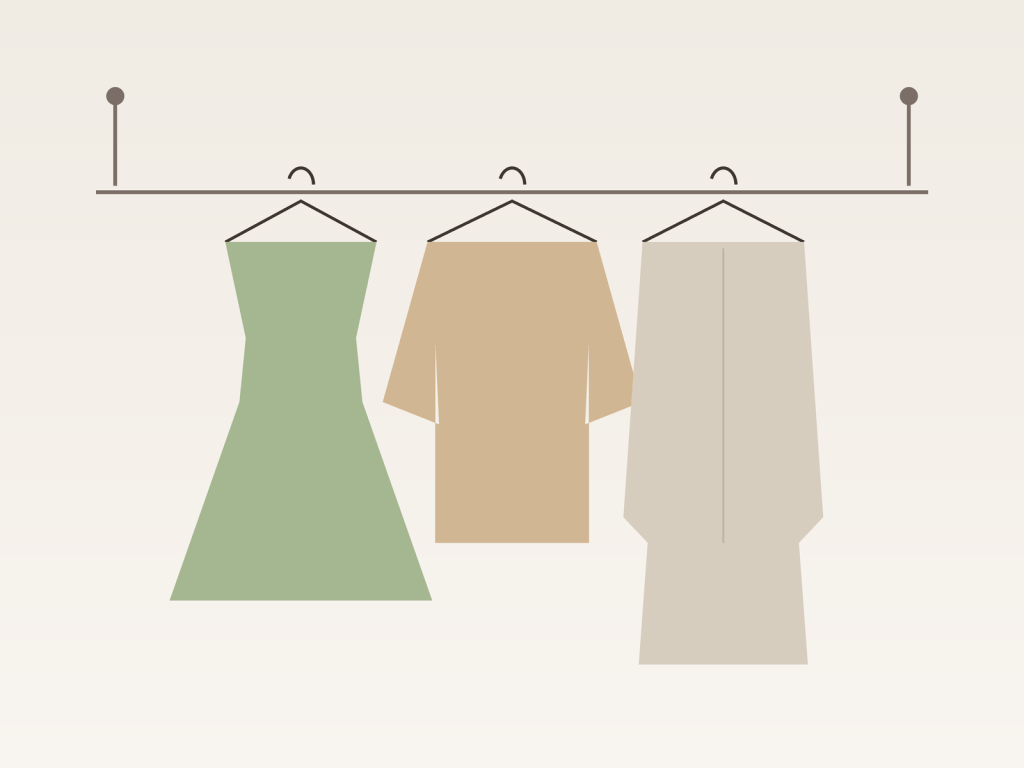
Most of us know the particular paradox of a full closet and nothing to wear. We stand in front of more clothing than our grandparents owned in a lifetime and feel, somehow, that we have nothing. It is a strange kind of poverty — abundance that does not satisfy.
The problem is rarely the amount. It is that so few of the pieces feel like ours. They were bought in a hurry, or on sale, or because a screen suggested them, or to suit the person we thought we should become. They hang there as a kind of quiet clutter — not quite loved, not quite released.
The weight of too much
A crowded wardrobe asks something of us every morning. Each hanger is a small decision, and a hundred small decisions before breakfast leave us tired before the day has begun. We like to think of clothing as self-expression, and it can be — but a closet full of near-misses expresses mostly indecision.
There is a lightness that comes from owning less. Not as a rule or a challenge, not a number to hit, but as a simple preference for keeping what you actually wear and reach for and feel like yourself in. A wardrobe that breathes — with space between the hangers — is easier to see, easier to love, and far easier to get dressed from.
Fewer, and yours
Consider, gently, the pieces you already return to. Most people wear a small fraction of what they own, again and again. Those favourites are not an accident; they are data. They quietly tell you what you find comfortable, what suits your life as it actually is, what makes you feel like the truest version of yourself.
Style, understood this way, is less about acquiring and more about noticing. It is a slow conversation with yourself rather than a performance for others. The aim is not a perfect wardrobe but an honest one — clothes that fit the life you live, in colours and shapes that feel like home.
There is a deeper pleasure, too, in tending what you keep. A garment worn for years, mended once or twice, softened by washing, carries something a new purchase cannot — a small history. To care for a few good things is to step gently out of the cycle of constant replacement. It is slower. It is also, quietly, more satisfying.
A gentle invitation
This week, notice what you reach for — not what you think you should wear, but what your hand actually chooses on an ordinary morning. Notice, too, the pieces you walk past every day without touching. There is no need to discard anything in haste. Simply pay attention.
Over time, a wardrobe can become less of a storage problem and more of a small daily pleasure — a handful of things you genuinely love, ready when you need them. Enjoying what you already own is its own quiet form of abundance. It asks for nothing new. It only asks you to look again, kindly, at what is already yours.
 chapter2
Leave a comment